The First Dedicated Listening Space and Its Limitations
When I first decided to carve out a dedicated listening space in my home, I was filled with excitement and a bit of naivety. My initial setup was a modest corner of my living room, equipped with a basic pair of speakers and an old amplifier. While it was a significant upgrade from my previous makeshift arrangements, I quickly learned that the room itself was filled with limitations. Sound bounced off the walls in unpredictable ways, and I found myself distracted by the room's imperfections rather than immersed in the music.
Why Room Acoustics Matter More Than Many Gear Upgrades
Over time, I came to realize that no amount of high-end gear could compensate for poor room acoustics. I remember a particular evening spent listening to my favorite vinyl, only to be interrupted by an echo that shattered the experience. I began to understand that the acoustics of a room could either enhance or detract from the listening experience. Investing in sound treatment—like acoustic panels and bass traps—became a priority. It's not just about the gear; it's about how that gear interacts with the space around it.
Mistakes Made While Building a Listening Room
In my eagerness to create the perfect listening room, I made numerous mistakes. One of the biggest was underestimating the importance of speaker placement. Initially, I had my speakers too close to the walls, which muddied the sound and created an overwhelming bass response. I also neglected to consider the seating arrangement; my listening position was often too far to appreciate the stereo imaging. These missteps taught me valuable lessons about the trial-and-error process in crafting a listening space.
Speaker Placement Experiments Over the Years
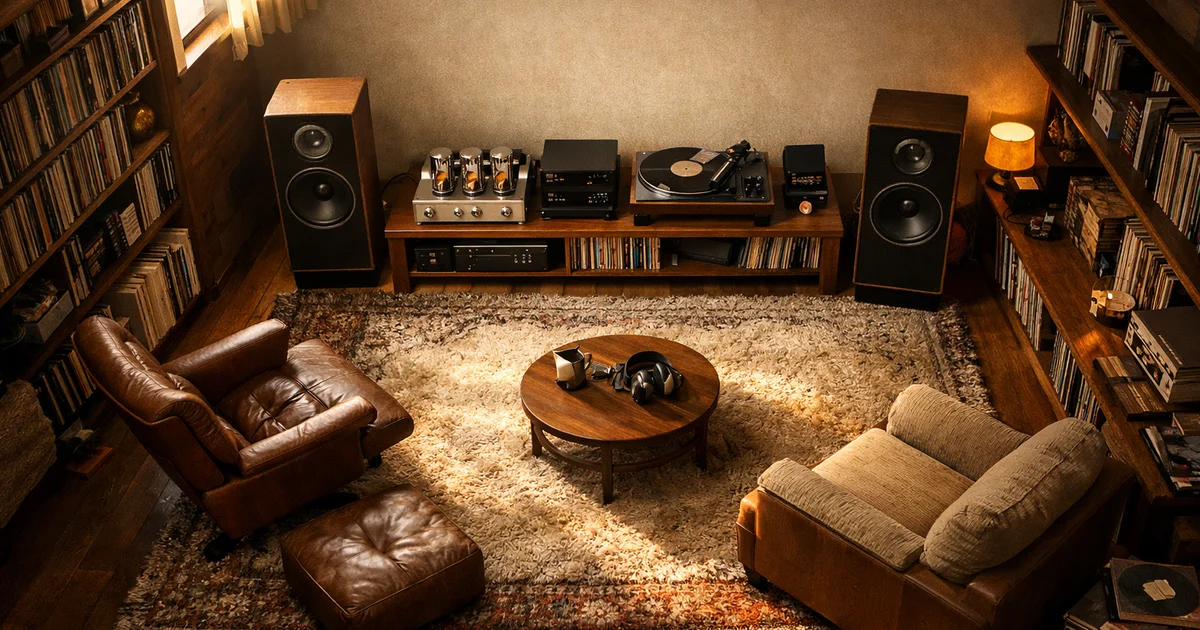
Speaker placement has been an ongoing experiment for me. I often spent hours reconfiguring the layout, measuring distances, and listening intently to the subtle changes in sound. I discovered that placing my Wharfedale Diamond 12.1 speakers slightly away from the walls and angling them toward my listening position created a much more dynamic soundstage. The clarity was astounding, and the music began to breathe in ways I had not expected.
The Role of Furniture, Rugs, Shelves, and Room Layout
Furniture plays a crucial role in the acoustic performance of a room. Early on, I made the mistake of using hard surfaces that reflected sound rather than absorbed it. After adding soft furnishings, such as rugs and upholstered chairs, I noticed a significant improvement in sound quality. Bookshelves also became a part of my listening room, not just for aesthetic appeal but as a way to diffuse sound waves. Strategically placing them around the room helped to break up standing waves and enhance the overall listening experience.
Balancing Aesthetics and Sound Quality
One of the challenges I faced was balancing aesthetics with sound quality. I wanted my listening room to be a space I could enjoy visually, not just acoustically. This often meant making compromises. I chose equipment that not only sounded good but also fit into my room's design. For instance, my Yamaha A S301 integrated amplifier, with its sleek silver finish, became a centerpiece rather than an eyesore.
Incremental Improvements Instead of Expensive Overhauls
Rather than going for expensive overhauls, I focused on making incremental improvements. Each change—whether it was upgrading my headphones to the Schiit Asgard 1 amplifier or swapping out speakers—was carefully considered. These small adjustments often yielded more significant results than I anticipated, and they allowed me to enjoy the process of building my listening room over time.
Lessons Learned from Living with the Same Room for Years
Living with the same room for years has taught me invaluable lessons about patience and persistence. I learned that the best listening experience comes through gradual refinement and adaptation. The room evolved with me, reflecting my tastes and preferences while also accommodating the unique challenges it presented.
Advice for Enthusiasts Building a Listening Space on a Realistic Budget
For fellow enthusiasts looking to build a listening space on a budget, my advice is simple: prioritize your room's acoustics and take your time. Invest in a few key pieces of equipment that resonate with you emotionally, rather than chasing trends. Experiment with your layout and be open to making changes. Remember, the goal is to create a space that not only sounds good but also feels like home.
Conclusion: The Art of Building a Listening Room
In conclusion, great listening rooms are not built overnight. They require patience, experimentation, and a willingness to learn from one’s mistakes. As I reflect on my journey, I am grateful for the time I’ve spent tuning my space and the many lessons learned along the way. Building a listening room is as much about the music as it is about the environment in which it is heard. With each small improvement, I find deeper connections to my favorite albums, and that is what truly matters.
Comments
Join the discussion — your nickname is saved in this browser.
real talk: who has the time to experiment with setups when I just wanna enjoy my album?
acoustics are key, who cares about the gear if your room sounds like a cave?
made tons of mistakes when I set mine up, but now my friends think I'm a sound wizard