The First Console Restoration Project
As a lifelong gamer, I can still remember the day I decided to restore my first console: the Nintendo Entertainment System (NES). I stumbled upon it at a garage sale, buried under a pile of dusty toys. The moment I laid eyes on it, a wave of nostalgia washed over me. I could almost hear the chiptunes of my childhood games echoing in my mind. It was in rough shape, but I couldn’t let it slip away. Thus began my journey into the world of console restoration.
Why Old Consoles Need Maintenance After Decades of Use
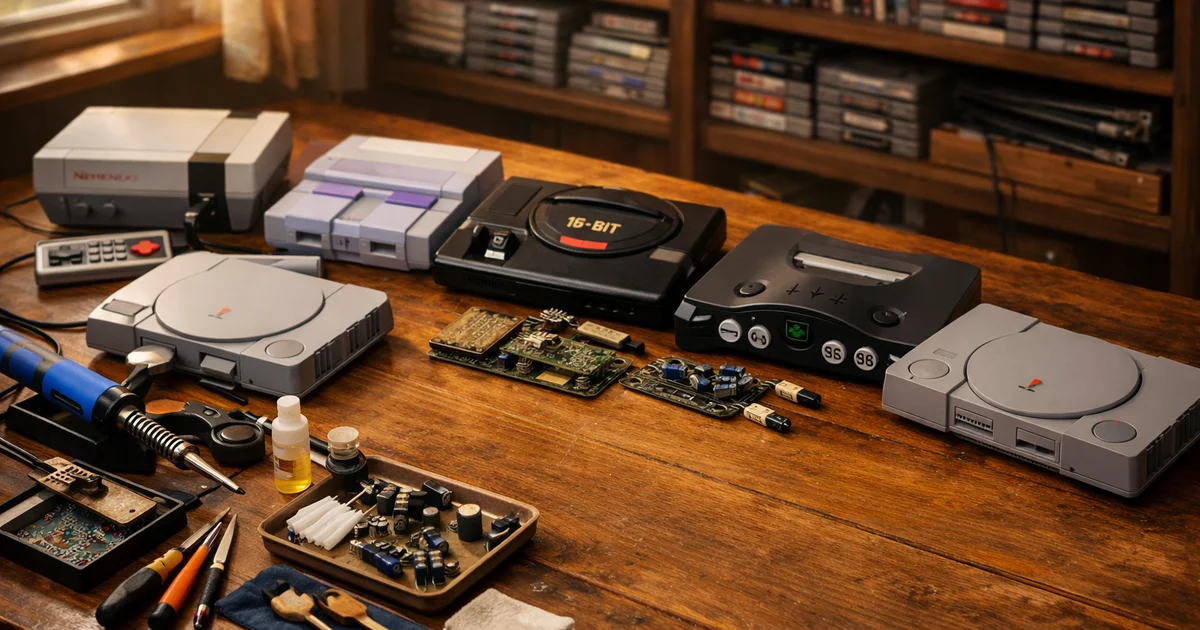
Old consoles, like the NES, Super Nintendo (SNES), and Sega Genesis, were built to last, but time is not kind to electronics. After decades of use, dust, dirt, and oxidation can wreak havoc on internal components. Capacitors dry out, solder joints crack, and connectors corrode. It's essential to maintain these consoles not only for their functionality but also to preserve the memories tied to them.
Cleaning, Repairing, and Preserving Aging Hardware
Restoration is not merely about fixing a console; it’s about preserving a piece of history. For example, cleaning the cartridge slot of an NES can breathe new life into the system. I often use CAIG DeoxIT D5S-6 contact cleaner to remove corrosion and ensure a solid connection between the cartridges and the console. This simple act can dramatically enhance performance and reliability.
Common Issues Found in Retro Consoles
When restoring retro consoles, you’ll encounter several common issues:
- Dirty Cartridge Slots: Dust and grime can prevent games from working.
- Bad Capacitors: These can lead to power issues or complete failure.
- Corroded Connectors: Rust can disrupt connections, leading to poor performance.
Replacing Capacitors, Cleaning Cartridge Slots, and Fixing Connectors
One of my most rewarding experiences was replacing the capacitors in my Sega Genesis. I learned that bad capacitors can lead to audio issues and even cause the console to fail to boot. Using a multimeter to test each capacitor was a painstaking process, but it was worth it when I finally powered it on and heard that familiar Sega jingle.
Cleaning the cartridge slots with a Gamebit Screwdriver made it easy to access the insides of the console. This tool is essential for anyone looking to dive into restoration, especially for systems like the SNES and Nintendo 64, which use unique screws. My trusty blue Gamebit screwdriver has become a staple in my toolkit.
Mistakes Made During Early Restoration Attempts
Like many enthusiasts, I made my fair share of mistakes during my early restoration attempts. I once attempted to clean a cartridge slot with rubbing alcohol, only to realize later that it wasn’t the best choice. It left a residue that attracted more dust. I also learned the hard way about the importance of using the right tools. Skipping the proper screwdrivers led to stripped screws and unnecessary headaches.
Balancing Originality with Reliability
When restoring consoles, there’s often a debate about originality versus reliability. While I appreciate the charm of original components, I also recognize the need for upgrades in some cases. For instance, replacing old capacitors with modern equivalents can enhance performance without compromising the console's integrity. It’s a delicate balance, but one that every collector must navigate.
Essential Tools and Supplies for Beginners
If you’re just starting your restoration journey, here are a few essential tools and supplies:
- Gamebit Screwdrivers: Essential for accessing the internals of most retro consoles.
- CAIG DeoxIT D5S-6: A reliable contact cleaner for maintaining connections.
- iFixit Repair Toolkit: A multipurpose toolkit that includes various tools for electronics repair.
Having the right tools can make a significant difference in your restoration experience.
Advice for Collectors Who Want to Preserve Hardware for Future Generations
As a collector, I believe that preserving hardware is as much about the memories as it is about the consoles themselves. When restoring a system, consider documenting the process. Take photos and notes; they can serve as a reminder of your journey and the joy these consoles bring.
Additionally, I recommend keeping consoles in a cool, dry place away from direct sunlight. Use anti-static bags for games and ensure that dust covers are utilized when the consoles are not in use. These simple steps can help safeguard your collection for future generations.
Conclusion: More Than Just Hardware
Restoring an old console is more than just a technical endeavor; it's a way to preserve the memories and experiences that shaped our gaming lives. Each scratch, each worn button tells a story, and by restoring these consoles, we keep those stories alive. Whether it’s the NES that introduced me to gaming or the Sega Genesis that brought friends together for epic battles, every restoration is a step toward preserving our shared history.
In the end, it’s about more than just fixing hardware; it’s about keeping the spirit of gaming alive for future generations. So pick up that screwdriver, dive into the nostalgia, and start your own restoration journey. You might just find that in the process, you’re also preserving a piece of your past.
Comments
Join the discussion — your nickname is saved in this browser.
You gotta have the right tools. Just got a Gamebit screwdriver!
What's the deal with bad capacitors anyway? Isn't that just old tech being... old?
Just did a complete cap swap on my Sega. Totally worth it.