Why I Returned To Prime Lenses
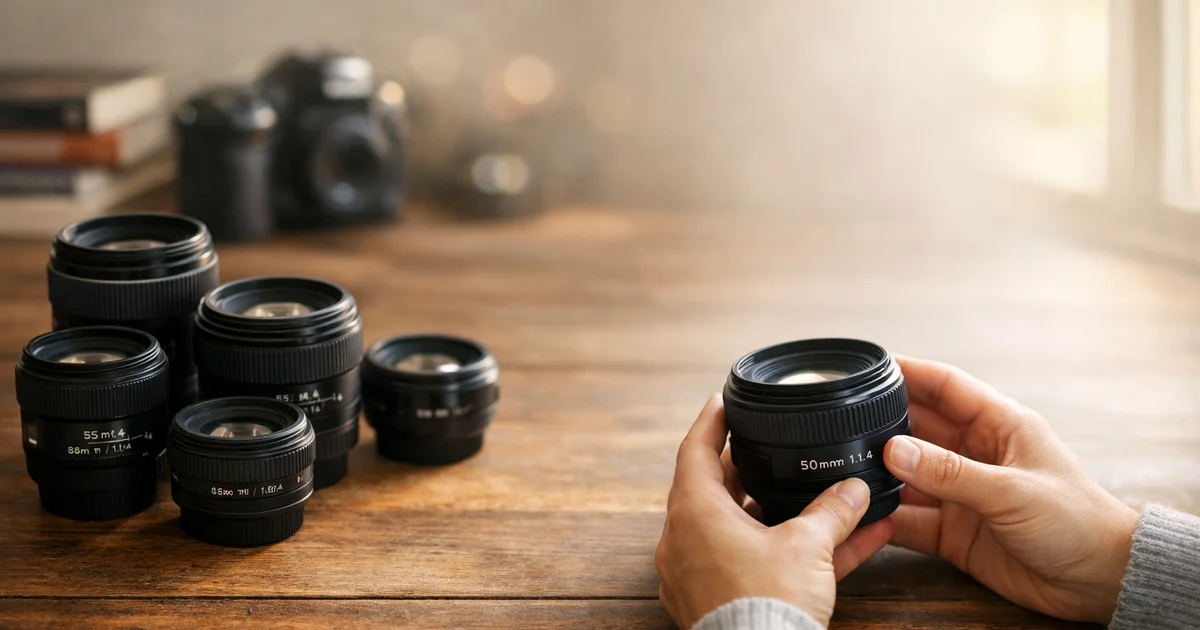
In a world dominated by zoom lenses, my return to prime lenses has reignited my passion for photography and creativity. Let me share my journey and the insights I've gained along the way.
In a world dominated by zoom lenses, my return to prime lenses has reignited my passion for photography and creativity. Let me share my journey and the insights I've gained along the way.
My journey with photography began with a modest camera and a single prime lens — a 50mm f/1.8. Those early days were filled with excitement; the ability to create beautiful images with a simple, fixed focal length opened my eyes to the essence of composition. I vividly remember the thrill of capturing street scenes, portraits, and still life, all while learning to see the world through a 50mm perspective. The lens felt like an extension of my vision, challenging me to move closer or step back to frame my shots perfectly.
The simplicity of prime lenses encouraged me to focus on the composition rather than getting distracted by the myriad of options that zoom lenses offer.
As I delved deeper into photography, I noticed a shift in my habits. Zoom lenses started to dominate my bag. Their versatility was hard to resist; a single lens could cover everything from wide-angle landscapes to tight portraits. The convenience of not having to switch lenses was appealing, especially during events or while traveling.
However, I realized that this convenience often came at a cost. I found myself relying on the zoom to frame my shots rather than considering the composition and light. The art of moving around my subject and exploring different angles became less frequent, and I missed the spontaneity that came with prime lenses.
It wasn’t until I picked up a Sony FE 35mm f/1.8 that I began to feel the spark of creativity reignite. This lens, with its sharpness and beautiful bokeh, transformed my shooting experience. I remember one afternoon, wandering through a local market, where the vibrant colors and dynamic interactions demanded attention. The 35mm focal length was perfect for capturing candid moments without intruding on my subjects.
The lens allowed me to shoot in low light, thanks to its fast aperture, and I was able to create images that had depth and character. It reminded me of the benefits of fixed focal lengths — forcing me to engage with my surroundings and rethink my approach to composition.
See store for price
Using prime lenses has a way of enhancing one's compositional skills. With a fixed focal length, I found myself more intentional with my framing. The constraints of a prime lens encouraged me to think critically about every shot. I became more aware of my surroundings, considering light, shadows, and the relationships between elements within the frame.
The creative process became less about what my camera could do and more about how I could see. I often found myself experimenting with angles and perspectives, crafting a narrative in each image. This shift in mindset was invigorating, as I learned to see beyond the confines of zoom ranges.
Prime lenses certainly come with their set of advantages and disadvantages. On the plus side, they typically offer better optical quality, faster apertures, and a lighter weight compared to their zoom counterparts. The larger maximum aperture means I can shoot in low light conditions without sacrificing shutter speed or ISO, which is invaluable in my street photography.
However, there are also limitations. The fixed focal length requires a more deliberate approach, which can be challenging in fast-paced situations. I’ve found that I need to be more strategic about my movements and how I frame my subjects, which can sometimes lead to missed opportunities.
One of the most significant lessons I’ve learned from returning to prime lenses is the importance of movement. Rather than relying on zooming in and out, I’ve started to embrace the act of physically moving closer or further away from my subjects. This not only enhances my understanding of composition but also fosters a deeper connection with the scene I’m capturing.
For instance, while shooting a bustling street festival, I found myself weaving through the crowd, capturing both wide shots of the excitement and intimate portraits of individuals lost in their moments. Each step revealed new compositions and stories that I might have overlooked with a zoom lens.
As I’ve explored the world of prime lenses, I’ve developed a fondness for specific focal lengths that suit my style of photography.
Each focal length serves a distinct purpose, and understanding when to use them has made me a more versatile photographer.
See store for price
See store for price
While I’ve extolled the virtues of prime lenses, I must acknowledge that there are scenarios where zoom lenses still have the upper hand. For instance, during events or weddings, where the action can be unpredictable, having a zoom lens can provide the flexibility needed to adapt quickly.
Similarly, when traveling, lugging around multiple prime lenses can be impractical. A versatile zoom can cover a range of situations without the hassle of constantly swapping lenses. It’s all about finding the right tool for the job at hand.
If you’re contemplating your first prime lens, I encourage you to consider your style of photography and what you want to achieve. Start with a focal length that aligns with your interests — for street photography, a 35mm might be ideal, while portrait photographers may prefer a 50mm or 85mm.
Additionally, be prepared for the learning curve that comes with fixed focal lengths. Embrace the challenge of moving to compose your shots and allow yourself the freedom to experiment. It’s through these limitations that creativity flourishes.
See store for price
Returning to prime lenses has profoundly changed my approach to photography. The limitations they impose have opened my eyes to new possibilities, allowing me to engage with my environment in more meaningful ways. I’ve learned that the best photographs often come from a deep understanding of light, composition, and connection, rather than the latest gear. In a world filled with options, sometimes the simplest tools can inspire the most creativity.
Comments
Join the discussion — your nickname is saved in this browser.
i wanna try primes, but do i really have to move? like what if i like standing still?
i have a friend who only uses primes and he's always missing shots.
i'm all for prime lenses, especially the low light moments.