How I Started Learning Horology
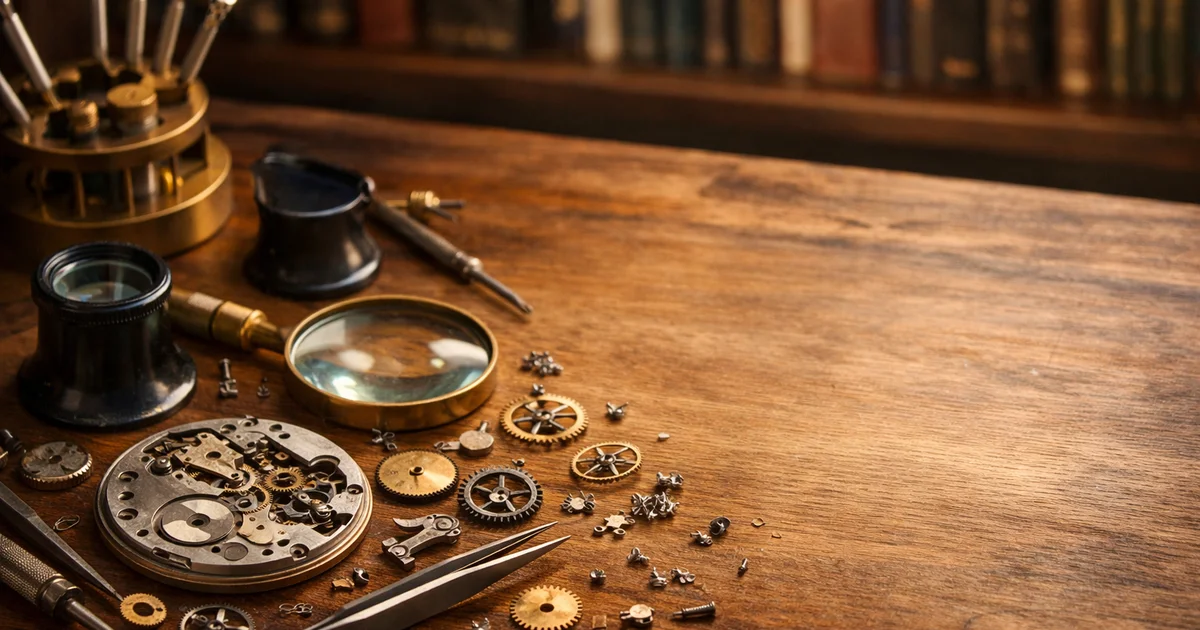
My journey into the world of horology began with a simple fascination for mechanical watches. As I delved deeper, I discovered not just the mechanics but also the artistry behind these intricate timepieces.
My journey into the world of horology began with a simple fascination for mechanical watches. As I delved deeper, I discovered not just the mechanics but also the artistry behind these intricate timepieces.
It all began with a vintage Seiko 5 that my grandfather gifted me. The moment I laid eyes on it, I was captivated by its simplicity and elegance. The ticking sound of the mechanical movement was like music to my ears. I remember staring at the dial, transfixed by the way the seconds hand glided smoothly over the markers. It was this watch that ignited my curiosity about how these marvelous machines worked.
See store for price
As I wore the Seiko 5, I realized there was a rich history and a vast world behind every mechanical watch. I started reading about the evolution of watchmaking, the different types of movements, and the craftsmanship involved. It was astonishing to learn that a simple wristwatch could contain hundreds of tiny parts, all working together in harmony to keep time.
I began my education by diving into the basics of mechanical movements. Understanding the difference between automatic and hand-wound watches was crucial. Automatic movements, like the one in my Seiko 5, wind themselves through the motion of the wearer's wrist, while hand-wound watches require manual winding. This distinction opened my eyes to the intricacies of watch mechanics.
As I delved deeper, I became fascinated with the escapement, balance wheel, and mainspring. The escapement is the heart of any mechanical watch, regulating the release of energy from the mainspring to the gear train. The balance wheel, in turn, oscillates back and forth, ensuring the precision of timekeeping. I spent hours watching videos and reading articles, trying to grasp these concepts fully. Each piece of knowledge was like adding another tool to my horological toolbox.
One of the most thrilling experiences was the first time I opened a watch caseback. With a simple case opener kit, I carefully pried open the back of an old pocket watch I had found at a flea market. The inner workings were a sight to behold! I was immediately struck by the beauty of the gears and the craftsmanship that went into creating each component. It was a moment of revelation; I realized I wanted to learn how to service and repair watches myself.
See store for price
My journey into horology was not without its pitfalls. I made plenty of mistakes along the way, but each one taught me something valuable. I voraciously consumed books on watchmaking, such as "Watchmaking" by George Daniels and "The Watch Book" by Gisbert L. Brunner. Online forums and YouTube channels also became invaluable resources, connecting me with fellow enthusiasts and experts alike.
What I love most about horology is its dual nature: it is both technical and artistic. The engineering marvels of mechanical movements are awe-inspiring, but the design and aesthetic appeal of watches add another layer of appreciation. Each watch is a canvas where craftsmanship meets art. Whether it's the finishing on a movement or the elegance of a dial, there’s beauty in both form and function.
As I navigated through the world of watches, I encountered several misconceptions among newcomers. One common myth is that all mechanical watches are expensive. While luxury brands do dominate the market, there are many affordable options, such as the Seiko 5 and Orient Bambino, that offer incredible value without sacrificing quality.
See store for price
For those interested in horology, I encourage exploring beyond just collecting. Learn about the mechanics, take apart a watch, and understand what makes it tick. Join watch clubs, attend workshops, and connect with other enthusiasts. The more you learn, the more you’ll appreciate the artistry and engineering behind each timepiece.
Horology is a journey that only grows more fascinating as you delve deeper into its complexities. Each watch tells a story, not just of the time but of the people who designed, built, and wore it. As I continue to explore this rich world, I find myself more enchanted with every tick of the second hand. Whether you’re a collector or a curious newcomer, remember that the beauty of horology lies in the details — and there’s always more to discover.
Comments
Join the discussion — your nickname is saved in this browser.
horology sounds fancy but it’s just a bunch of tiny moving parts
I can’t afford watches, how about those paper ones instead?
the tinkering part sounds fun but I’d be in over my head