My Favorite Measuring Tools: A Craftsman's Guide
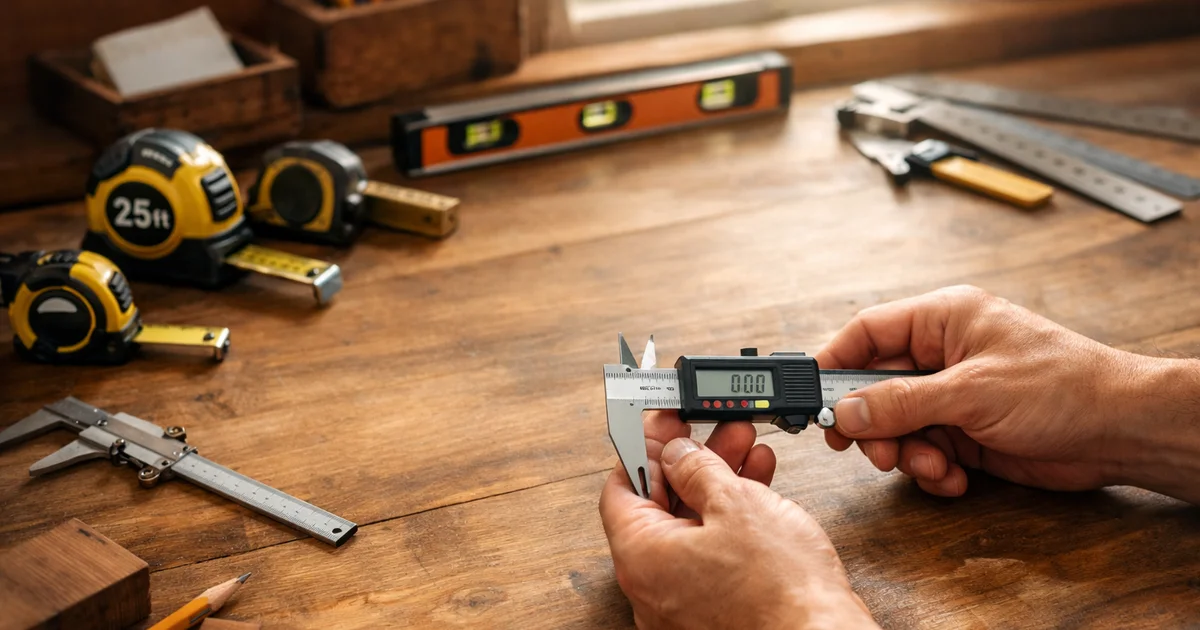
Accurate measurements are the backbone of any successful project. In this article, I share my favorite measuring tools and the lessons learned from countless hours in the workshop.
Accurate measurements are the backbone of any successful project. In this article, I share my favorite measuring tools and the lessons learned from countless hours in the workshop.
Early in my woodworking journey, I embarked on a project to build a dining table for my family. I was excited to create something beautiful, but I quickly learned that the difference between a well-crafted piece and a disaster often comes down to measurements. I miscalculated the dimensions of the tabletop, and as a result, the legs were uneven, leading to a wobbly structure. This experience ingrained in me the importance of precision and the right measuring tools, which are often more critical than the power tools we wield.
While power tools can make cutting and shaping wood faster, measuring tools are the unsung heroes of the workshop. They ensure that every piece fits together perfectly. A powerful saw becomes useless if the cuts are not accurate. Over the years, I have come to appreciate tools like tape measures, calipers, and levels for their role in creating quality work.
The tape measure is likely the most frequently used measuring tool in any workshop. I rely on the Crescent Lufkin Shockforce G2 25-ft Auto Lock Tape Measure for its durability and ease of use. This tape measure features a locking mechanism that keeps measurements in place, allowing me to work with precision without worrying about the tape retracting unexpectedly. It's made from a combination of metal, plastic, and stainless steel, making it resilient enough to withstand the rigors of the workshop.
Whether I'm measuring long lengths for lumber or checking the dimensions of smaller components, this tape measure is always within reach.
See store for price
The Starrett Combination Square is another must-have in my toolkit. This tool combines a ruler with a protractor and a center head, making it versatile for both measuring and marking angles. I often use it for tasks that require precise 90-degree angles or when I need to find the center of a board quickly.
One of the best aspects of this tool is its solid construction, which ensures accuracy over time. The ability to easily switch between measuring and marking makes it an invaluable resource for any project.
See store for price
For more intricate projects, I turn to my iCarbide Digital Caliper. This tool allows for precise measurements down to 0.0001 inches, which is essential when working on detailed joinery or fitting parts together. It's especially useful for metalworking, but I also find it valuable in woodworking when I need to measure the thickness of boards or the diameter of dowels.
The digital display makes it easy to read, and its waterproof design means I don't have to worry about spills in the workshop.
See store for price
When it comes to ensuring that things are perfectly aligned, I rely on my Stabila 24" Tech 196-DL Digital Electronic Level. This tool is indispensable for hanging cabinets, installing shelves, or ensuring that a workbench is level. The digital readout provides an easy-to-read measurement, and the padded case helps protect it when not in use.
An accurate level can make the difference between a project that looks professional and one that appears haphazard. I always double-check my work with this level before moving on.
See store for price
In my years of crafting, I've seen too many projects go awry due to simple measurement mistakes. One common error is misreading the tape measure, which can lead to cutting wood too short or too long. Another frequent issue is failing to account for the thickness of the material when measuring for joinery.
These mistakes not only waste materials but also time and effort. By using reliable measuring tools and taking my time, I have minimized these errors significantly. It’s a lesson I wish I had learned sooner.
As with many tools, there's a noticeable difference between cheap measuring tools and quality ones. I’ve learned that investing in durable, well-constructed tools pays off in the long run. Cheap tape measures can warp easily, and digital calipers can malfunction, leading to inaccuracies.
Quality tools, like those from Starrett or Stabila, tend to be more reliable and last longer, making them worth the investment. I’ve used cheaper alternatives and ended up replacing them multiple times, which ultimately costs more.
Developing good measuring habits has transformed my craftsmanship. I now double-check my measurements, take notes when necessary, and make it a point to verify dimensions before making cuts. This practice has not only improved the quality of my work but has also increased my confidence in my skills.
When you make measurement accuracy a priority, it reflects in the finished product. Good work truly begins with good measurements.
Proper care and storage of measuring tools are vital for maintaining their accuracy. I ensure that my tools are cleaned after each use, especially the calipers which can accumulate dust and debris. Storing them in padded cases or dedicated drawers keeps them protected from damage.
I also regularly calibrate my digital tools to ensure they remain precise. This simple act can prevent future frustrations during projects.
When I first started, I didn’t have all the measuring tools I needed. I gradually built my measuring kit by investing in quality pieces over time. I suggest starting with a good tape measure and a combination square, then adding calipers and a level as your skills and projects grow.
By focusing on quality over quantity, you’ll end up with a toolkit that serves you well for years to come, enabling you to take on a broader range of projects.
For those just starting in the workshop, my advice is to prioritize learning how to measure accurately. Practice measuring different materials and take your time to understand how each tool works. Don’t rush through this process; the skills you develop early on will serve you for a lifetime.
As you gain experience, you’ll find that measuring becomes second nature, allowing you to focus more on the creative aspects of your projects.
In conclusion, good work begins with good measurements. The tools I’ve discussed have been essential to my growth as a craftsman and have helped me avoid pitfalls along the way. By investing in quality measuring tools and developing strong measuring habits, anyone can improve their craftsmanship and create lasting pieces. Remember, the foundation of any successful project lies in the precision of your measurements.
Comments
Join the discussion — your nickname is saved in this browser.
imagine getting a Starrett for marking angles. you must be living the high life, man.
I’m convinced 90% of all measure mistakes are from trying to show off in front of friends.
tape measures are the real MVPs in woodworking. ever tried doing without one? 😂