The First Cordless Tool That Changed the Way I Worked
I remember the first time I picked up a cordless drill. It was a Milwaukee M18 Fuel Hammer Drill, a tool that forever changed how I approached projects in my workshop. The freedom it offered was revolutionary; no more tripping over cords or searching for outlets. It was compact, powerful, and reliable, allowing me to tackle jobs with ease. As I drilled through wood and metal, I felt empowered, knowing I could work anywhere without limitations.
Why Corded Tools Dominated Workshops for Decades
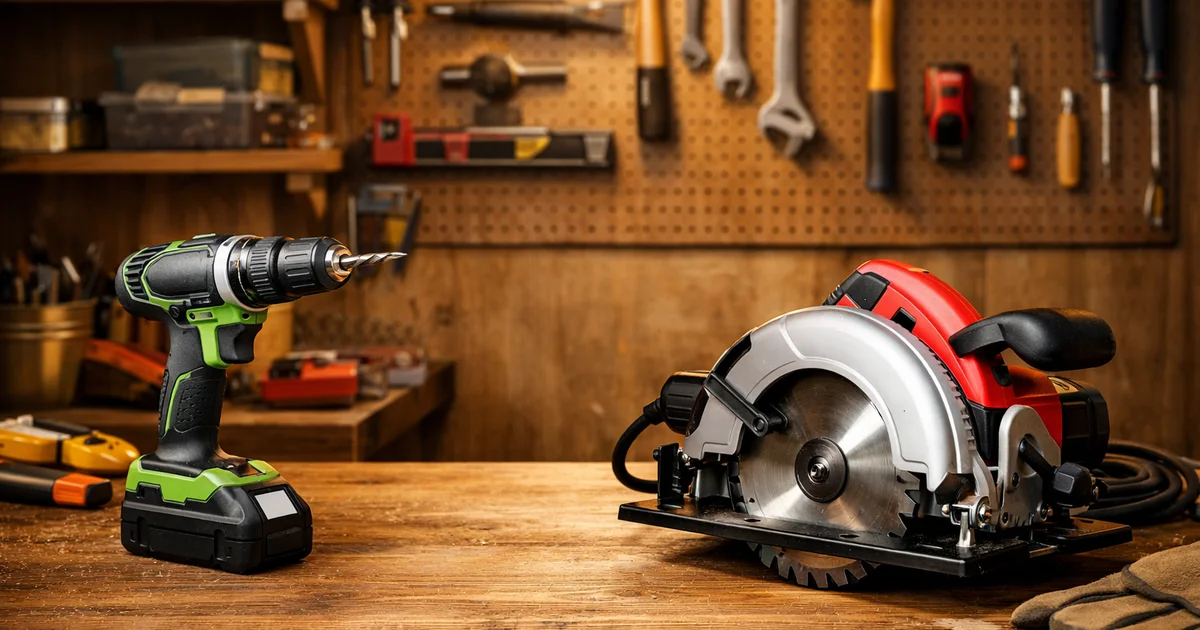
For many years, corded tools were the backbone of workshops. Their consistent power and reliability made them the go-to choice for professionals. Tools like circular saws and angle grinders were built to handle tough jobs and could run indefinitely as long as there was power. I often found myself favoring my corded Makita circular saw for larger cuts, knowing it wouldn’t let me down in the middle of a project.
The Evolution of Battery Technology
The game began to change with advancements in battery technology. Lithium-ion batteries have dramatically improved power tools' performance, offering longer run times and quicker charging. Today’s cordless tools, like the DeWALT DCF860 Impact Driver, have torque and speed that rival their corded counterparts. I’ve seen firsthand how these innovations have made cordless tools a viable option for heavy-duty tasks.
Real-World Advantages of Cordless Tools
One of the most significant advantages of cordless tools is mobility. I often find myself working in tight spaces or outdoors, where access to power outlets is limited. Cordless tools allow me to move freely without the constraints of cords. They are particularly handy for tasks like drywall installation or furniture assembly, where maneuverability is key.
Situations Where Corded Tools Still Make More Sense
However, there are still situations where corded tools shine. In my experience, for extensive cutting tasks, I trust my corded Makita circular saw for its consistent power. When working on projects that require extended use, such as demolition or large woodwork, I prefer the reliability of corded tools that won’t run out of juice mid-job.
Power, Convenience, Reliability, and Long-Term Ownership
When comparing corded and cordless tools, power is a crucial factor. Corded tools generally deliver more consistent performance, especially for high-demand tasks. For instance, my Bosch angle grinder is a trusted companion for metalwork, delivering the power needed without interruption. This reliability is vital for long-term ownership, as I know these tools will serve me well for years to come.
The Hidden Costs of Battery Ecosystems
One aspect often overlooked is the hidden costs of battery ecosystems. While cordless tools offer convenience, the need to purchase multiple batteries can add up. I’ve learned to weigh the long-term costs of maintaining a battery-powered toolkit versus a corded setup. For beginners, it’s essential to consider how many tools you plan to invest in and whether those tools will share battery systems.
Mistakes Made When Choosing Between Corded and Cordless Tools
In my early days, I made the mistake of assuming all cordless tools were created equal. I quickly learned that while some tools excel in certain areas, others may fall short. For example, I initially bought a lightweight cordless drill for heavy-duty tasks, only to find it lacking in power and durability. It’s essential to consider the specific needs of each project when selecting tools.
Advice for Beginners Building a Workshop Today
If you’re just starting to build your workshop, my advice is to assess your needs carefully. Consider the types of projects you’ll undertake and choose tools accordingly. A balanced approach—investing in a mix of corded and cordless tools—can provide the versatility you need without breaking the bank. Tools like the Milwaukee 2904-20 Hammer Drill are excellent for beginners, combining power with ease of use.
Conclusion
In conclusion, the choice between corded and cordless tools often depends on the job at hand rather than the technology itself. Each has its strengths and weaknesses, and understanding these can lead to better decision-making in your workshop. Whether you opt for the reliability of corded tools or the convenience of cordless ones, remember that a good tool earns its place—and a great tool keeps it for decades.
Comments
Join the discussion — your nickname is saved in this browser.
just got a new cordless impact driver, so far so good!
i once mixed up brands when buying batteries, cost me a fortune.
can’t decide whether to add more cordless tools or just stick with what i have.